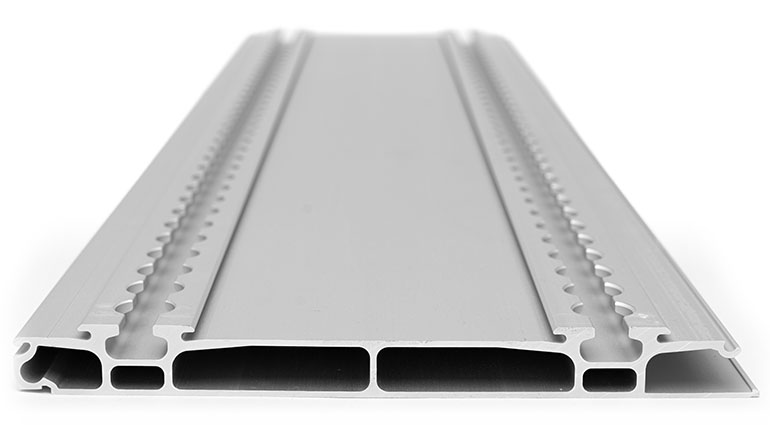
Sustainable design and material use
Due to its low-profile construction and thin design, we have been able to minimise material use and waste during production.
The reduction in material and weight benefits all product aspects across the the value chain: production, delivery, transport, installation, use, and especially its long-term impact.
Take advantage of a vehicle floor that meets today's and tomorrow's needs, but without adding unnecessary weight inside the vehicle or on the environment.
Accessible and sustainable transport
The Spacefloor® LX comes with clear sustainability benefits, especially compared to heavier floor alternatives from competitors. A lower total weight benefits installation and transport in numerous ways:
More payload margin means room for more passengers, adaptations, or cargo.
- Less fuel and fewer emissions, plus longer range between charging for EVs.
- Efficient transport and shipment thanks to thin design.
-
Energy-efficent floor production
We have optimised its production and been able to minimise material and waste. By reducing the time, energy and resources required per floor, we have lowered the overall carbon footprint of the Spacefloor® LX:
- Less weight and environmental impact – less material used per floor
- Efficient production – without adhesives, with less energy
- Less waste – standard lengths and click system reduce material and spill
- No harmful chemicals – adhesives are no longer necessary for manufacturing, which improves the conditions for all who work with it, including manufacturers and installers
- Low‑Carbon aluminium – emits only 4 kg CO₂ per kilo, which is 42% lower than the European average and 73% lower than the global average.
(compared with 6.9 kg in Europe and 14.8 kg globally)

Based on green aluminium
Our aluminium supplier, Hydro, is a leader in renewable energy production. We have achieved a clear reduction in environmental impact with their support. Their Hydro Low-Carbon Aluminium is produced primarily with hydropower and other renewable energy sources. It has a carbon footprint of ≤ 4.0 kg CO₂e per kg of aluminium. This is around 73% lower than the global average for primary aluminium production.
By taking clear steps towards sustainable production, we are meeting the rising expectations of customers and regulators, while also impacting the future of the vehicle adaptation industry.
Kilos of CO2e emissions per kilo aluminium
Low-carbon aluminium 1
4 kg CO2
Europe average 2
6.9 kg CO2
World average 2
14.8 kg CO2
- Footprint below 4.0 kg CO2e, Hydro internal estimates
- Source: International Aluminium Institute (2024)