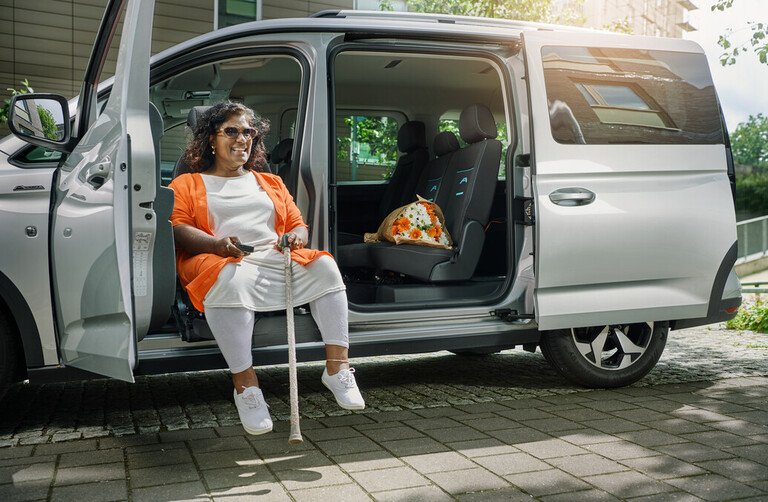
 When you're a car user with impairments, it's important to know if your adaptations and personal mobility solutions can be reinstalled when changing car models.
Car adaptations are not universally applicable to all car models. The vehicle adaptation and accessibility products you are currently using may not be useful if your individual needs change over time. Or maybe the type of adaptation used in combination with the vehicle is not suitable anymore. Not to mention the associated costs, which can also vary depending on the vehicle type and car model.
We have created a list of relevant points when changing your vehicle and transferring your accessibility solutions.
Moving your adaptations to another car
Planning ahead is something many people with disabilities are used to. For that reason, it may be possible for you to evaluate the long-term benefits of your vehicle adaptation and try to anticipate future personal needs. Consulting a certified installer to assess if your modification is appropriate for the new vehicle is probably the most effective approach. Plus, providing an estimate for transferring or replacing vehicle adaptations is part of their job.
Should you need to change your car again soon, then, if possible, choose adaptations that are easier to transfer or more universal in design. In addition to the specific needs of each car user, there are several general technical considerations that are relevant before changing car models.
The following aspects can certainly influence your decision-making:
Costs and expenses
Moving driving aids may be possible, but it might not be cost-effective. Although your car adaptation can be reused, there are still costs associated with removing and reinstalling it. Consult your installer to see if these expenses could be more costly than buying new equipment.
Warranty issues and insurance protection
Manufacturers may not offer warranty coverage for adaptations that have been transferred, in particular older ones. If they believe the system is not warrantable, replacement parts may not be provided. Contact your insurance company to make sure that your protection continues.
Compatibility and guidance
During the process of choosing a new car, keep an ongoing dialogue with the professionals who install or reinstall your mobility solutions. Ask for guidance and talk with them about compatibility and any extra equipment needed for a transfer.
Condition and age of the equipment
The safety standards of older adaptations can be outdated or lack manufacturer support. Transferring outdated equipment may compromise usability, reliability, and safety.
Which vehicle modifications can usually be applied to other vehicles?
Some adaptations are more convenient to move and transfer and are more compatible with multiple vehicles than others. Mechanical and mounted car modifications are typically more straightforward to reuse between different car models. The vehicle is often less impacted by them as by more complex and integrated conversions. The amount of customisation your individual adaptions require can also affect the removability and compatibility between car models.
Here are some examples:
- Stowing solutions can include roof top boxes (like the Chair Topper, a storage solution for wheelchairs that is mounted on the roof), wheelchair or scooter boot hoists.
- Equipment for vehicle access and adapted seating: ramps, (smaller) wheelchair and mobility aid lifts, along with swivel seats, transfer boards and adapted vehicle seats can many times be moveable. Typically, these adaptations are mounted and not integrated into the car's core systems, which makes it possible to remove and reinstall them.
Swivel bases and seat lifts are great examples of customisable mobility solutions, which do not require permanent modification. The installation for all of these is completely reversible. In other words, your car's resale value won't be affected. Bringing them with you to your next car is an option.
- Driving aids for steering, acceleration and brake, electronic accelerators, hand and driving controls, pedal extensions, and steering aids can be more complex if they are integrated into the vehicle’s original layout and wiring. However, there are also numerous mechanical driving aids, which can be easier to relocate.
Accessibility without compromise
Planning and research in advance help you to find the right vehicle and adaptations which supports your independence without avoidable compromises. It's possible to move vehicle adaptations to a new vehicle. But it depends on the car model, adaptation, individual needs, and financial means. Some adaptations can be transferred, often stowage and car access equipment. Driving aids can be less interchangeable due to installation complexity.
In any case, always check compatibility and adaption options, or even alternatives, before deciding on a new vehicle. Before buying a vehicle, a certified and experienced installer can provide you with the best advice, cost estimates, and the right measurements.
Find installers near you